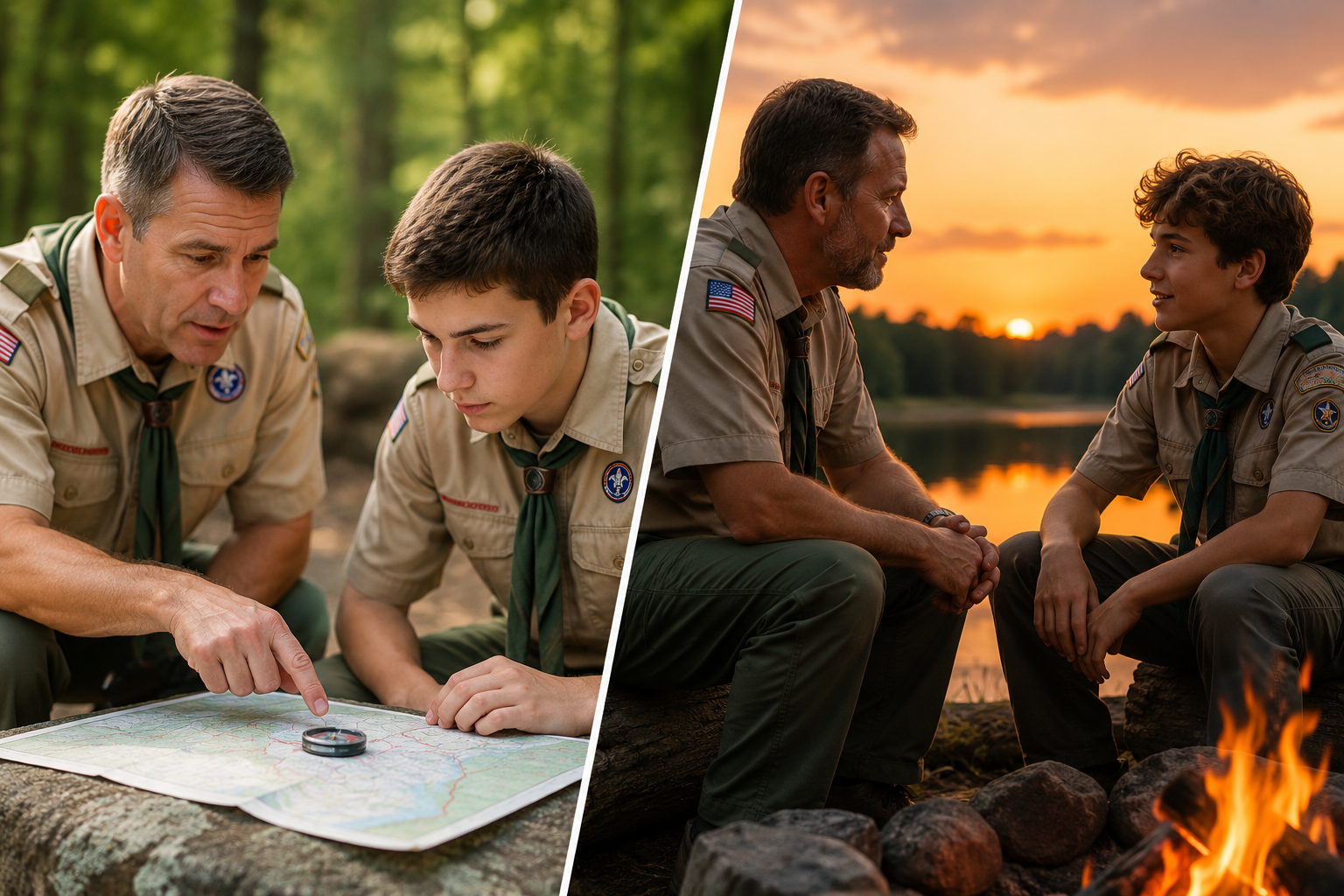
A Scout is struggling to lead a meeting. Should you tell them what to do, or help them discover how to become a stronger leader? The answer depends on whether the moment calls for coaching or mentoring.
What Coaching Looks Like
Coaching focuses on teaching or improving a specific skill. Like an athletic coach, a Scout leader helps a young person practice the techniques needed to perform well and make progress toward a clear goal.
In Scouting, coaching may help a Scout:
- Lead a meeting more effectively.
- Organize ideas and build a workable plan.
- Prepare the materials needed for an activity.
- Strengthen public-speaking skills and reduce distracting filler words.
A coach does not simply take over. Instead, the coach works alongside the Scout, for example, by reviewing a meeting plan together, identifying what is missing, and helping the Scout refine it.
How to Coach Effectively
Coaching is especially useful when a Scout needs help with a near-term task. A Senior Patrol Leader who is struggling to organize patrols at a campout, for example, may need guidance on setting up shared work areas, assigning responsibilities, or preparing equipment for a troop meeting.
Effective coaching relies on a few core practices:
- Ask open-ended questions. Try, “What do you think would work best?” or “What would you do differently next time?”
- Listen carefully. Focus on the Scout’s response and restate the main idea in their own words to show that you understand.
- Guide rather than answer. Add helpful observations, but allow the Scout to reach a conclusion.
- Motivate progress. Keep the Scout focused on the goal and encourage them to act on their plan.
The purpose of coaching is not to supply every answer. It is to help the Scout develop and apply the skills needed to find the answer.
What Mentoring Looks Like
Mentoring has a broader, longer-term purpose. It centers on character, confidence, judgment, and the ability to draw sound conclusions independently. This support can be especially important when a Scout faces an unfamiliar experience, such as a first campout. Whether the young person is a Cub Scout, a troop member, or a Venturer, a mentor helps build the confidence to face the unknown.
How Mentoring Differs
A mentor draws on relevant personal experience to help a Scout think through a challenge. For example: “When I was a Life Scout, I struggled with a similar goal. Creating an agenda and schedule helped me make progress. What approach do you think would work for you?”
That is different from simply handing the Scout paperwork and directing them to complete it. The mentor offers perspective, asks thoughtful questions, and supports the Scout’s own decision-making. Because mentoring depends on trust and connection, the Scout ultimately determines whom they view as a mentor.
All mentoring conversations must follow Scouting’s safeguarding requirements, including two-deep leadership. Within those boundaries, a mentor can listen, share relevant experience, and help a young person examine possible paths forward.
Coaching and Mentoring at a Glance
- Time frame: Coaching is usually short-term and tied to a meeting, event, or immediate responsibility. Mentoring may continue throughout a Scout’s time in the program and beyond.
- Primary focus: Coaching develops specific Scout or leadership skills. Mentoring supports confidence, character, judgment, and life skills.
- Approach: A coach works through the mechanics of a task. A mentor shares relevant experience and asks questions that help the Scout form their own conclusions.
- Outcome: Coaching improves performance in a current role. Mentoring supports long-term growth.
The strongest Scout leaders use both approaches. They coach when a skill needs attention and mentor when a Scout needs perspective, confidence, or sustained support. Together, these approaches help young people accomplish things they have never done before.
Real-World Example: A New Senior Patrol Leader
Imagine a Scout who has just become Senior Patrol Leader. Patrol participation is low, plans are made at the last minute, and meetings feel chaotic. Coaching and mentoring can both help, but in different ways.
The Coaching Response
A coach focuses on the immediate leadership process:
- What happened at the Patrol Leaders’ Council?
- What kept the patrols from participating?
- How could a clearer meeting plan assign responsibilities in advance?
The coach then helps the Scout create a practical plan, so each patrol knows what it is responsible for.
The Mentoring Response
A mentor might share a relevant experience: “When I served as Senior Patrol Leader, I used a roster to distribute tasks among the patrols. It clarified expectations and reduced conflict. Do you think a similar approach could help here?”
The mentor should follow that example with open-ended, answerable questions, not vague questions that leave the Scout uncertain. Used together, coaching and mentoring can give a new Senior Patrol Leader both an immediate plan and the confidence to grow into the role.
Avoid the Adult-Takeover Trap
Adult leaders can unintentionally take control by saying, “Here’s what you need to do.” Although that may solve the immediate problem, it teaches the Scout to depend on the adult as the fixer.
A better response is, “What do you think you should do?” Then use coaching and mentoring to help the Scout evaluate options, learn from experience, and choose a solution.
Be a Resource, Not the Solution
- Offer examples and advice without taking over.
- Ask questions that move the Scout toward their own answer.
- Allow appropriate mistakes to become learning opportunities.
- Support the Scout’s decision-making instead of replacing it.
The same principle can help adults work together: share perspectives, clarify responsibilities, and resist repeatedly solving tasks that belong to someone else.
As an adult Scout leader, your goal is to become unnecessary. Success means helping young people develop the judgment, confidence, and skills to solve their own problems. Scouts are still learning; they are neither perfectly wise nor incapable of growth. That is precisely why leaders are there, to guide them until they no longer need the guidance.
Use Both Approaches
Coaching and mentoring are not competing methods. They are most effective together. Coaching builds the skills a Scout needs now; mentoring helps that Scout develop the confidence and judgment needed for the future.
When leaders know which approach a situation requires, they can support youth leadership without taking it over. That balance is one of Scouting’s great strengths: giving young people opportunities to think, act, learn, and lead for themselves.
Keep up the important work. By combining coaching with mentoring, Scout leaders help build stronger young people one Scout at a time. Until next time, I hope to see you on the trail.
