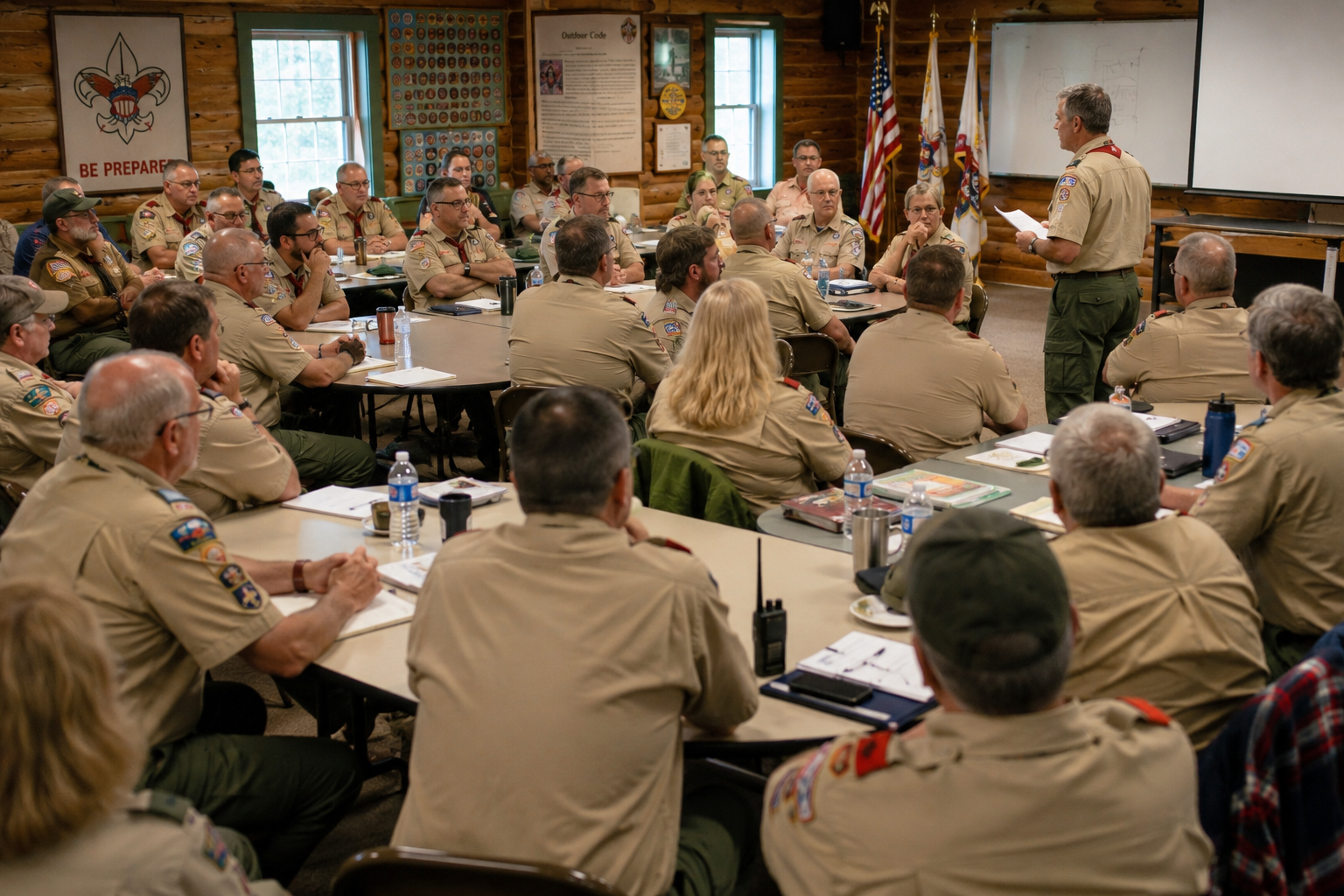
Wood Badge is one of the premier training experiences available to adult Scout leaders. Whether you serve as a Den Leader, Assistant Scoutmaster, Committee Chair, or in a crew or ship, Wood Badge is designed to strengthen your ability to lead. While it may sound unusual to those unfamiliar with it, Wood Badge is not a youth program. It is advanced leadership training for adults, while youth have their own counterpart in National Youth Leadership Training (NYLT).
Origins of Wood Badge
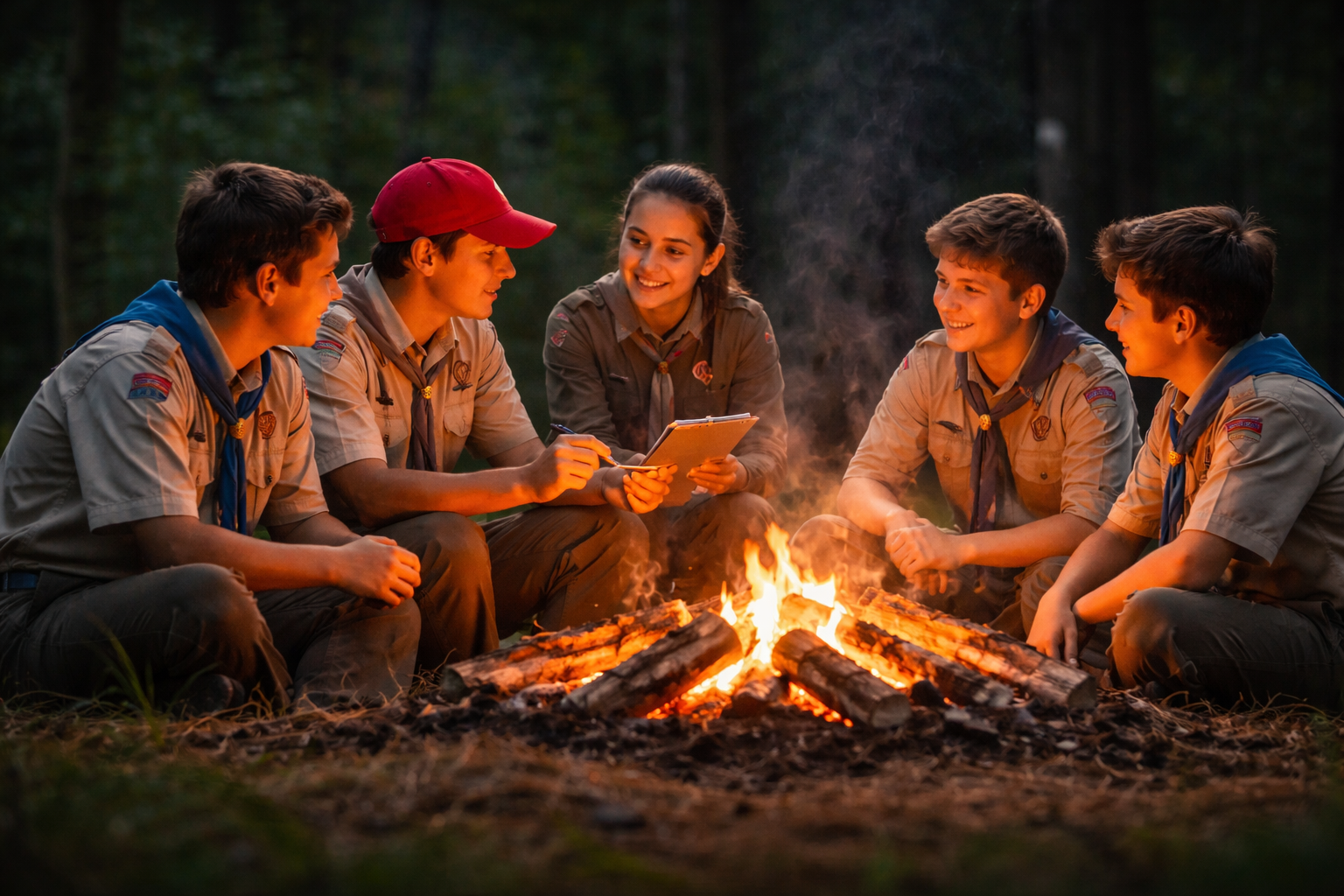
Wood Badge began in 1919 under Robert Baden-Powell at Gilwell Park, which was given to the Scout Association as a place to train adult leaders. In its earliest form, the course focused heavily on outdoor skills so that adults could learn them firsthand before teaching Scouts. Participants practiced camping, fire building, first aid, rescue skills, knot tying, and other essential skills through hands-on experience.
The tradition of the Wood Badge beads also traces back to Baden-Powell. The wooden beads, inspired by a necklace he acquired in South Africa, became one of the most recognizable symbols of the course. Over time, these beads came to represent both achievement and a connection to Wood Badge’s long history.
Early Focus: Learning by Doing
In its original form, Wood Badge emphasized practical outdoor instruction. Adult leaders learned by setting up camps, pitching tents, building fires safely, and practicing the same campcraft skills expected of Scouts. This learning-by-doing approach mirrored the Scouting method itself and helped leaders better understand the experience they were creating for youth.
Wood Badge in the United States
Wood Badge did not arrive in the United States until 1936, with early courses held at Schiff Scout Reservation in New Jersey. After interruptions during World War II, the first official U.S. Wood Badge course was conducted in 1948. Early American courses closely resembled the British model, though they gradually adapted to fit the needs of Scouting in the United States.
William “Green Bar Bill” Hillcourt played a major role in shaping the American program. Under his influence, Wood Badge strongly emphasized Scout skills, the patrol method, and patrol spirit. The program became more structured, consistent, and repeatable, giving leaders a reliable framework for training.
The Shift from Skills to Leadership
As Scouting evolved, Wood Badge evolved with it. Over time, the course shifted from focusing primarily on outdoor skills to emphasizing leadership development. Rather than concentrating only on how to complete tasks, Wood Badge began teaching leaders how to guide others, delegate effectively, and build strong teams.
Modern Wood Badge places particular emphasis on key leadership skills such as:
- Communication, including active listening
- Team development and teamwork
- Vision and goal setting
- Planning and delegation
- Leading others effectively
In other words, Wood Badge moved from teaching leaders simply what to do to teaching them how to lead others in doing it well.
The 2000s Redesign
In the 2000s, Wood Badge underwent a significant redesign. One of the main concerns was the amount of time the course required from participants. What had once been a full week-long experience was restructured into two weekends, making it more manageable for busy adult leaders while preserving the depth of the training.
The redesigned course became more modular and intentional in its structure. Rather than reducing the quality of the experience, the updated format organized the material more efficiently and made it more accessible to adults, balancing Scouting with work and family responsibilities.
A major feature of the modern course is ticket development. A Wood Badge ticket is a personal goal built through a series of practical steps. It is not a collection of unrelated tasks, but a focused plan that helps participants apply what they have learned and achieve meaningful results in their Scouting role.
What Has Not Changed
Although the course content has evolved, many of Wood Badge’s most meaningful traditions remain in place. These traditions connect today’s participants to the course’s roots and help preserve its identity within Scouting.
- The wooden beads worn on a leather thong
- The Gilwell neckerchief and tartan
- Patrol identity and patrol spirit
- Recognition ceremonies and songs
- A strong sense of fellowship among participants
These traditions matter because they reinforce the shared history and community that make Wood Badge memorable. At the same time, they support the broader purpose of the course: preparing adults to lead more effectively in service to Scouts.
Why Wood Badge Still Matters
Today, Wood Badge is open to more Scouters than ever before. It is valuable not only for leaders who work directly with youth, but also for those serving behind the scenes in committee, advancement, equipment, administration, and other support roles. Strong programs depend on capable, well-trained adults in every area.
Wood Badge has changed over time, but that change has strengthened the course rather than diminished it. Its focus may have expanded from outdoor skills to leadership training, yet its purpose remains the same: to equip adults to serve Scouts well. Every Scout deserves a trained leader, and Wood Badge continues to help make that possible.

- 🌐Scouting America Wood Badge https://www.scouting.org/training/resources-for-program-trainers-training-committees/woodbadge
- 🌐 WOSM Wood Badge Around the World https://www.scout.org/who-we-are/scout-movement/wood-badge
- 🌐 Scouting Magazine – Why Wood Badge? https://scoutingmagazine.org/2014/02/wood-badge/#google_vignette