Why Patrol Leader Training Matters
Let’s talk about training Patrol Leaders. The Patrol Method has been central to Scouting since Baden-Powell, and it remains one of the best ways for young people to learn leadership. This discussion applies directly to troop leadership, but it is also useful for Cub Scout leaders preparing youth to move into a troop environment.
What a Patrol Is
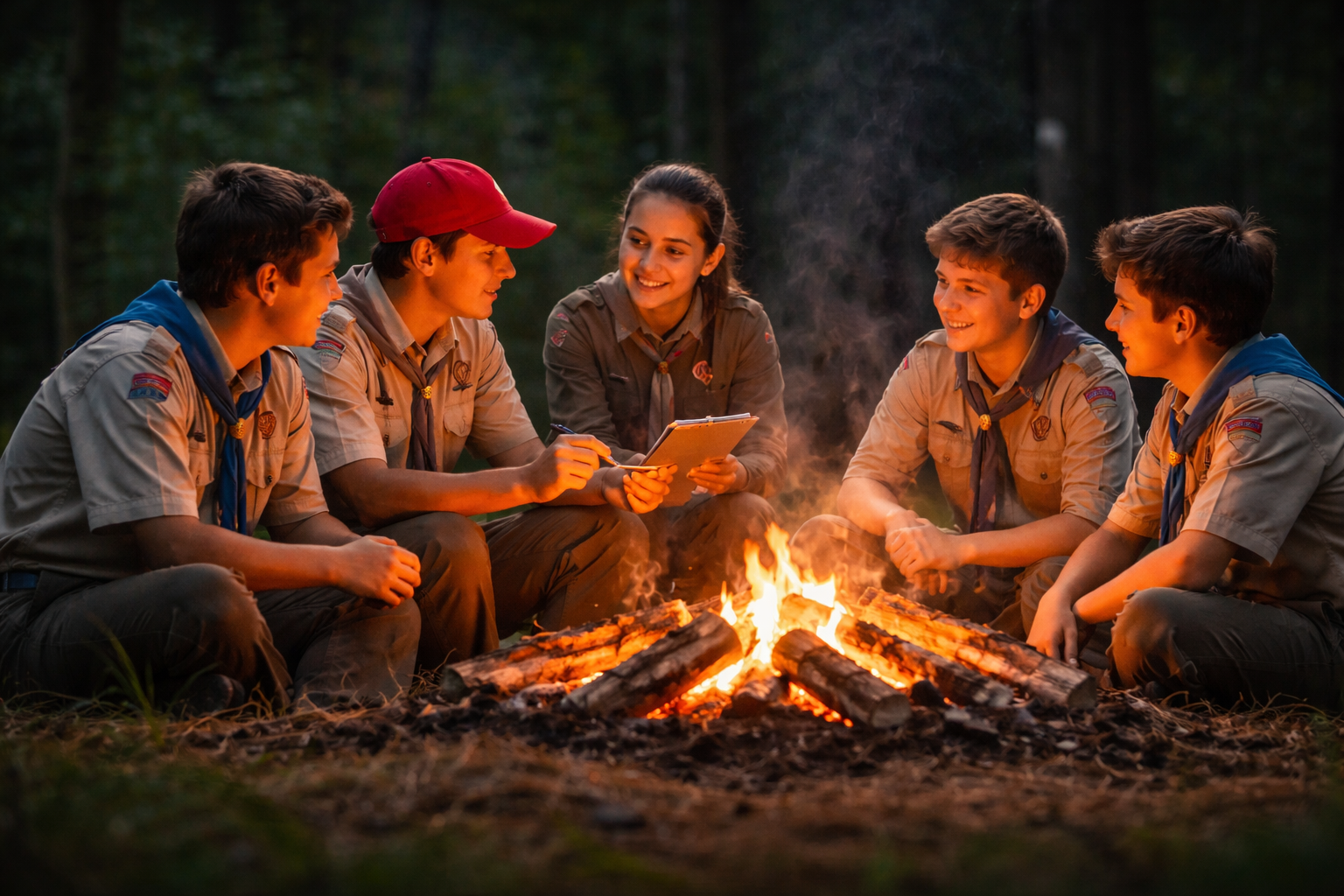
A patrol is a small group of Scouts, typically 8 to 12 members, who work together as a team. Patrols may include Scouts of different ages and ranks, and they make decisions together. A Patrol Leader usually serves with an Assistant Patrol Leader, giving youth meaningful leadership opportunities and a chance to develop real responsibility.
Patrols learn by doing. They do not grow through lectures and tests alone; they grow by working together, making decisions, solving problems, and participating in shared activities. In some troops, that even includes patrol camping, which can strengthen teamwork and ownership.
How Patrols Are Organized
Troops may organize patrols in different ways depending on their needs. Some use a first-year patrol for newly recruited Scouts, then later distribute those Scouts into established patrols. Others may have an older-youth patrol that can take on activities better suited to more experienced Scouts. The right structure depends on the troop, but the goal is always the same: build strong patrols that give Scouts a place to belong and lead.
Why the Patrol Method Works
When the Patrol Method is working well, it is powerful. It gives Scouts leadership opportunities at the patrol level, where leadership is personal and visible. A Scout earns the respect of patrol mates through actions, not just titles. The rest of the troop can see which patrols are functioning well, taking initiative, and having fun together.
A strong patrol also creates positive peer influence. When Scouts begin to work well as a unit, engagement rises. Members take ownership of tasks, support one another, and contribute in practical ways.
- The Patrol Leader keeps the group focused.
- The Assistant Patrol Leader supports and backs up the Patrol Leader.
- Other Scouts may take responsibility for equipment, food planning, flags, cheers, or morale.
When that ownership takes hold, a patrol can accomplish remarkable things. It stops feeling like school and starts feeling like something the Scouts truly own.
Common Reasons Patrols Struggle
The most common reason patrols fail is adult interference. Adults often step in too early, especially when things begin to look disorganized. But growth requires space. Scouts need the chance to work through challenges, disagreements, and mistakes.
In youth leadership training, groups are often described as moving through stages before they become effective. After a group forms, there is usually a period of friction and adjustment. That stage is normal. Adults should not rush in to eliminate it. If Scouts are safe, they need room to work through it and come out stronger on the other side.
Another major problem is micromanaging. If adults do things behind the scenes, constantly direct the Patrol Leader, or quietly control decisions, Scouts will notice. Once that happens, they stop looking to the Patrol Leader and start going straight to the adult. That undermines youth leadership immediately.
What Adults Should Do Instead
Adults should mentor, not control. Patrol Leaders need authority, support, and training, but they should still be the ones doing the job. The adult role is to guide with questions, not to act as a puppeteer.
That means:
- step back and observe before intervening;
- let Scouts solve routine problems on their own;
- ask questions such as “What do you think should happen?” or “How could you handle that?”;
- keep adults focused on safety while allowing youth to lead everything else.
No patrol develops through perfection. Leadership grows through trial, error, and reflection. Campouts may be messy. Meals may be late. Tempers may flare. As long as the situation is safe, those moments can become valuable learning experiences.
The Importance of Training
Every troop should provide leadership training for its youth leaders, especially Patrol Leaders. Without training, Scouts can be blamed for expectations they were never taught. Patrol Leaders need to understand how their role fits into the larger troop structure, including how they work with the Senior Patrol Leader and other youth leaders.
Training should happen whenever new leaders are elected or appointed. In many troops, that means at least once or twice a year. Consistent training gives Patrol Leaders the foundation they need to succeed.
Mentoring in Real Situations
When Patrol Leaders struggle, adults should be available as mentors. If a Patrol Leader asks what to do, the best response is often another question that helps the Scout think through the problem. Instead of handing over the answer, help the Patrol Leader arrive at a solution and act on it.
This is the difference between directing and mentoring. A director tells people exactly what to do. A mentor helps them think, decide, and lead. In Scouting, that distinction matters. Adults should handle safety concerns, but patrol problems, teamwork issues, and routine leadership challenges should stay in the hands of youth whenever possible.
A Real-World Example
Sometimes, patrol conflict comes from outside the troop. Hurt feelings, school dynamics, and differences in age can all affect how Scouts interact. In one example, a patrol had split into two groups: older Scouts and younger Scouts. The older group controlled leadership positions and excluded the younger members, who no longer felt like part of the patrol.
The issue turned out to be tied partly to school and social divisions outside Scouting. The solution was not for adults to take over the patrol, but to help the Patrol Leader bring the group together. Through discussion, mentoring, and activities that encouraged cooperation, the patrol gradually became more unified. Once those divisions were addressed, the patrol improved significantly.
That is an important reminder: a patrol should feel like a team. If someone is always on the outside, the group is not functioning as it should.
The Bottom Line
The Patrol Method works if adults allow it to work. Scouts need training, support, and mentoring, but they also need room to lead. When adults step back, stay focused on safety, and resist the urge to control everything, patrols become stronger, more capable, and more united.
Patrol leadership should never be treated as a minor role. It is one of the core places where Scouting leadership is learned. If adults mentor well and avoid taking over, the Patrol Method becomes exactly what it is meant to be: the foundation of youth leadership in Scouting.
What Success Looks Like
I have seen patrols accomplish impressive things when they are trusted to function as patrols. They develop identity, resilience, and confidence. They learn to solve problems, support one another, and grow into capable leaders.
The key lesson is simple: adults should not minimize the Patrol Leader’s role or take over the work of the patrol. Instead, they should coach, mentor, and create the conditions in which youth leadership can thrive. The Patrol Method is not a side feature of Scouting. It is the core of how Scouting teaches leadership. When Scouts are trained well and given the freedom to lead, the method works exactly as intended. Until next time… I’ll see you on the trail.

- 🌐 Troop Meeting Agenda: https://troopleader.scouting.org/troop-meetings/
- 📄 Meeting Planner PDF: https://troopleader.scouting.org/wp-content/uploads/sites/5/2019/03/Fillable-Planning-Form.pdf
- 🌐 Scouts BSA Troop Resources: https://www.scouting.org/programs/scouts-bsa/resources/
- 🌐 The Senior Patrol Leader Handbook: https://www.scoutshop.org/senior-patrol-leader-handbook-660536.html