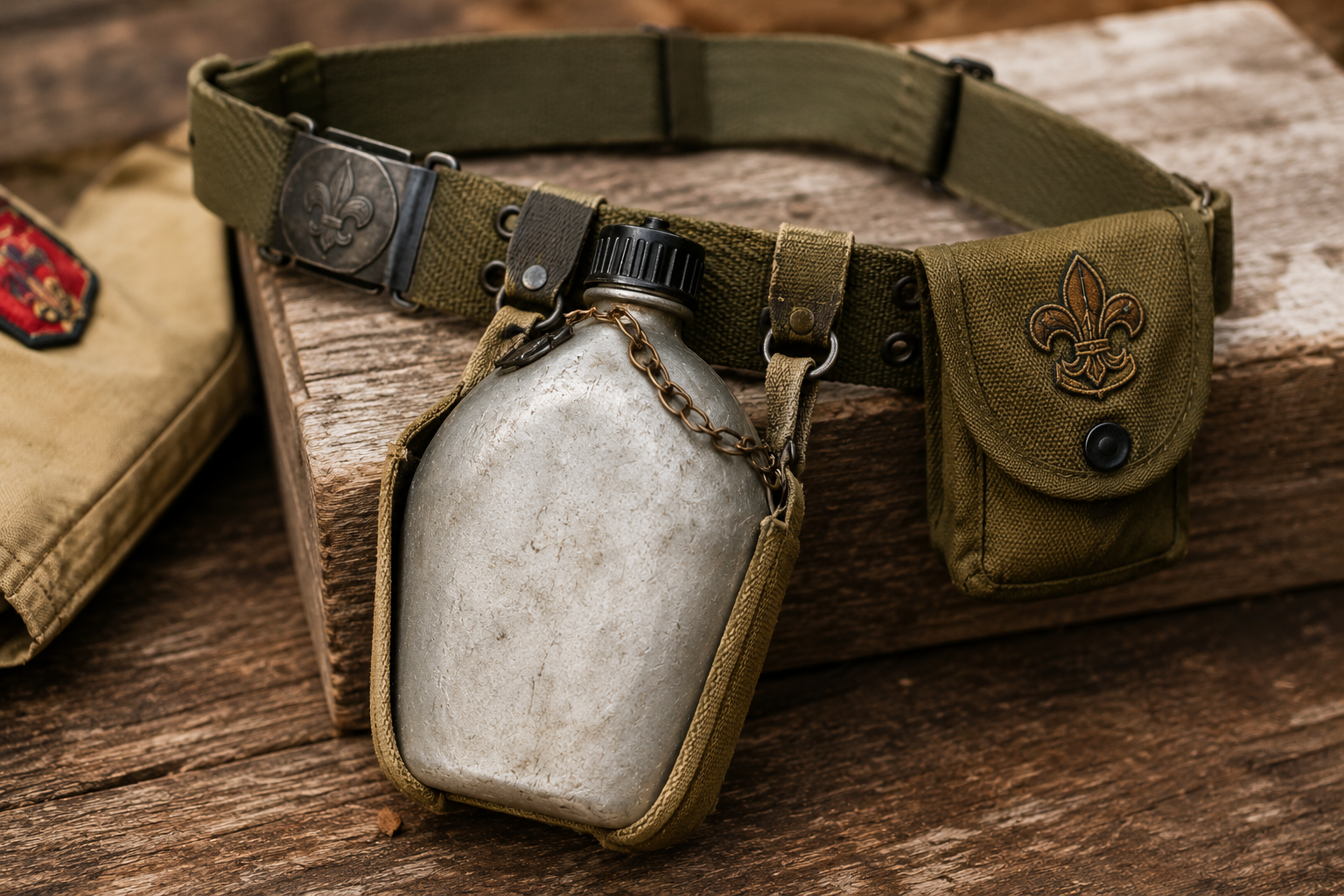
For generations of scouts, one of the most important pieces of equipment has not been a pocket knife, a compass, or even a tent. It has been the canteen. Simple as it seems, a canteen represents something much bigger than a container for water. It stands for preparedness, self-reliance, and personal responsibility.
Why the Canteen Matters
Hydration is not optional. When scouts are hiking, camping, paddling, or spending long hours outdoors, water is essential for safety and performance. Heat exhaustion and dehydration are real risks, and one of the easiest ways to prevent them is to make sure every scout has water on hand and knows when to drink it.
A canteen should be filled before leaving camp, and it should contain drinkable water that the scout is willing to use. That sounds obvious, but it is one of the first habits leaders need to reinforce. If a scout is thirsty, it is already time to drink. Waiting too long can turn a small issue into a serious problem.
This is also where the scouting motto, Be Prepared, becomes practical. A scout may forget socks, tent pegs, or extra batteries and still manage. Forgetting water is different. Without it, the outing can quickly become unsafe.
What the Canteen Teaches
A canteen is one of the first pieces of equipment that teaches scouts to take care of themselves. No one else can drink water for them. They must remember to carry it, refill it, and use it when needed. That makes the canteen an excellent lesson in responsibility.
It also teaches important leadership habits:
- Planning ahead before leaving camp or starting a hike.
- Paying attention to personal needs before a problem develops.
- Practicing self-reliance in the outdoors.
- Building accountability for personal gear and personal health.
For many young people, this is a first real lesson in self-care. They begin to understand that being prepared is not just about helping others. It also means making sure they are ready themselves.
Scouts often learn the importance of water the hard way: by running out. Anyone who has been thirsty on the trail knows how quickly discomfort can turn into a real problem. Dry mouth, fatigue, headaches, and poor decisions can show up faster than many young people expect. For teenagers especially, hydration can feel like an afterthought until they discover that it affects everything from energy and focus to safety and enjoyment.
Learning the Hard Way
That is why leaders constantly remind scouts to fill up before leaving camp, top off at every opportunity, and pay attention before thirst becomes urgent. Many camps now have bottle-filling stations, which makes it easier than ever to refill a canteen, Nalgene, or hydration pack. Still, the lesson remains the same: the container may change, but the responsibility does not.
Water also has to be managed wisely. On longer hikes, canoe trips, or backcountry outings, some water may be needed for meals as well as drinking. Dehydrated trail food requires water to prepare, and that means scouts must think ahead about how much to carry and when they can refill. Good hydration is not only a comfort issue. It is part of leadership, planning, and risk management.
Different Activities, Same Rule
The right container depends on the activity. A canteen works well for many outings. A Nalgene bottle is a sturdy everyday choice. For runners, cyclists, or longer-distance hikers, a hydration pack may be the better option because it makes drinking easier while moving. In hot conditions or during heavy exertion, many people also need electrolytes to replace what the body loses through sweat.
The setting may change, but the principle stays the same. At a theme park, on a work site, on the water, or deep in the woods, having drinkable water available is part of being prepared. Planning ahead saves money, prevents avoidable problems, and makes the outing safer and more enjoyable.
A Lesson That Lasts Beyond Scouting
One reason the canteen matters so much is that it teaches habits scouts carry into adulthood. Learning to monitor hydration builds discipline, awareness, and self-care. Those habits matter later in life, whether someone becomes a parent, a worker in a demanding outdoor job, a service member, or simply an adult responsible for others.
Water can even matter in emergencies. A clean supply may help rinse dirt from a scrape or support basic first aid until more help is available. More broadly, staying hydrated reduces preventable problems and helps people stay capable, alert, and comfortable in the outdoors. A canteen may seem like a small piece of gear, but it represents a very large idea: personal responsibility.
What Do You Carry?
Every scout and leader eventually finds a favorite way to carry water. Maybe it is a classic canteen, a metal bottle, a Nalgene, or a hydration pack. Whatever the choice, the important thing is the habit behind it. Carry it. Fill it. Use it. Set the example. Till next time, I’ll see you on the trail. ⚜

- 🌐 The Scouting Programs Guide https://www.scouting.org/programs/
- 🌐 Publications for Adult Volunteers https://www.scouting.org/programs/scouts-bsa/resources/adult-publications/
- 🌐 Scouting Safely & Homesickness https://www.scouting.org/health-and-safety/safety-moments/homesickness/