Scouting America now offers a Family Troop option. What does that mean for Scouts, parents, and adult leaders? This overview explains how Family Troops work, what remains unchanged, and what chartered organizations should consider before choosing this model.
What Is a Family Troop?
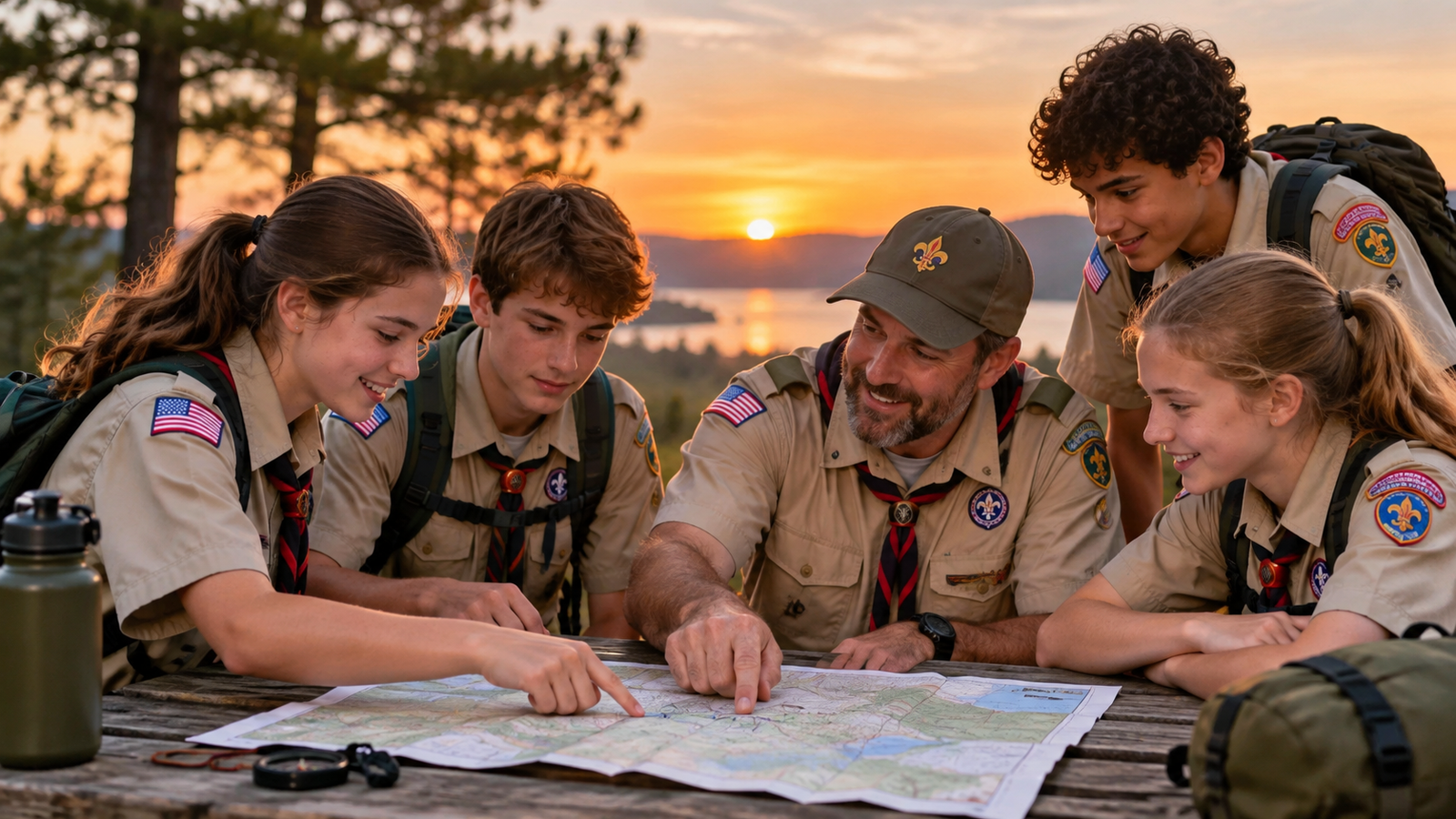
A Family Troop is a co-ed troop for boys and girls. It operates under one charter with one committee and one leadership team.
Before this option was introduced, a chartered organization could sponsor separate boy and girl troops. Those troops could operate independently or as linked units, sharing resources such as equipment, committee members, and some adult leaders while remaining separate units.
The Family Troop option combines those structures into a single troop. Scouting America introduced it in response to chartered organizations that wanted a co-ed model.
An Option, Not a Requirement
A Family Troop is one of several available models. A chartered organization may continue to sponsor a boy troop, a girl troop, linked boy and girl troops, or a Family Troop. The goal is to provide a strong troop environment in which every interested youth can participate in the Scouting experience.
Who Decides?
The chartered organization determines whether a unit will be a boy troop, a girl troop, linked troops, or a Family Troop.
If the organization already sponsors separate boy and girl troops, it may keep that structure or begin the process of combining them. An organization with only one troop may also choose the Family Troop model to expand participation. In every case, the decision belongs to the chartered organization.
Evaluating the Option
Scouting America provides a guide and worksheet to help chartered organizations decide whether a Family Troop is the right fit. Leaders should review those materials with the chartered organization before making any change.
The Patrol Method Remains in Place
The patrol method does not change. Each patrol continues to have its own identity and youth leadership, including a patrol leader and assistant patrol leader, with representation at the patrol leaders’ council.
- Patrols continue to use their own names, flags, yells, and cheers.
- Patrols may be single-gender or mixed, subject to applicable Scouting policies and the chartered organization’s direction.
- Patrol identity should come first; leaders should avoid framing activities as girls competing against boys.
Whether a Scout is a boy or a girl, each young person is a Scout participating in the same program and patrol structure.
Adult Leadership
A Family Troop has one Scoutmaster, supported by Assistant Scoutmasters. The chartered organization selects the Scoutmaster and helps build a cohesive leadership team.
That team should provide consistent mentoring, coaching, advancement support, and Scoutmaster conferences. The troop should not be divided into separate leadership tracks that make it unclear whom Scouts should approach.
Safeguarding Youth
Safeguarding requirements and barriers to abuse remain essential in every troop. Every adult leader must complete the required training and understand how the rules apply in a co-ed setting.
Leaders should keep these principles in mind:
- Troop events and activities should be open to all eligible members rather than divided into boys-only or girls-only opportunities.
- Camping arrangements must follow current safety requirements, including any rules that affect single-gender patrols.
- Adult leadership coverage may need to be adjusted to meet safeguarding requirements.
A Familiar Co-Ed Model
Co-ed participation is not new to Scouting. Venturing crews and Exploring programs have long used co-ed models. What is new is applying that approach to a troop organized as one Family Troop.
What Stays the Same?
The core Scouting program remains unchanged regardless of troop model:
- Program and values: All Scouts follow the same program and core values.
- Youth leadership: Scouts continue to lead through the patrol method and the patrol leaders’ council.
- Advancement: Requirements and advancement processes remain the same.
- Outdoor adventure: Scouts participate in the same range of troop activities and outdoor experiences.
- Leadership development: Scoutmasters and Assistant Scoutmasters continue to mentor and coach every Scout.
- Safeguarding: Youth protection requirements and barriers to abuse remain fully in effect.
What May Change?
Although the program stays the same, adopting the Family Troop option may require practical adjustments.
Leadership and Patrol Arrangements
The troop may need additional adult leaders to meet safeguarding requirements. Some patrols may also need to remain single-gender for camping or other activities, depending on current policy.
Unit Identity
Combining two troops may affect the unit number, insignia, and other identifying materials. The chartered organization should confirm what changes are required before ordering or replacing uniform items.
Meetings and Administration
Linked troops that previously met separately may move to one meeting. The transition may also require the organization to combine or coordinate:
- Bank accounts and financial procedures
- Equipment and storage
- Advancement records
- Calendars and activity plans
- Camp reservations and other event logistics
- Committee and parent volunteer responsibilities
The committee should review both troops’ systems, resolve conflicts, and assign clear responsibilities. Some short-term disruption is normal when two structures are combined, but the result may be a stronger team with more volunteers and shared resources.
Recruitment and Family Benefits
A Family Troop can broaden recruitment by welcoming boys and girls into the same unit. It can be especially convenient for families with children of different genders because they may attend one troop meeting and participate in one shared program instead of managing separate schedules.
The option can also expand the pool of parents, volunteers, and prospective Scouts. Families with only sons or only daughters remain welcome in the troop model approved by the chartered organization.
Making the Decision
Adult leaders should not force a transition. The chartered organization has the authority to choose the troop model and approve any change.
Before moving forward:
- Review Scouting America’s Family Troop guide and worksheet.
- Discuss the available models with the chartered organization.
- Confirm leadership and safeguarding requirements.
- Plan how records, finances, equipment, calendars, and meetings will be combined.
- Communicate the decision and transition plan clearly to Scouts and families.
Whether the organization chooses a boy troop, a girl troop, linked troops, or a Family Troop, the purpose remains the same: deliver a safe, high-quality Scouting program that helps every Scout grow. As I often say, “We are building a better America, one Scout at a time.” This is part of what I call the “Renaissance of Scouting.” Till next time, I’ll see you on the trail.

Click here to watch the video on YouTube.