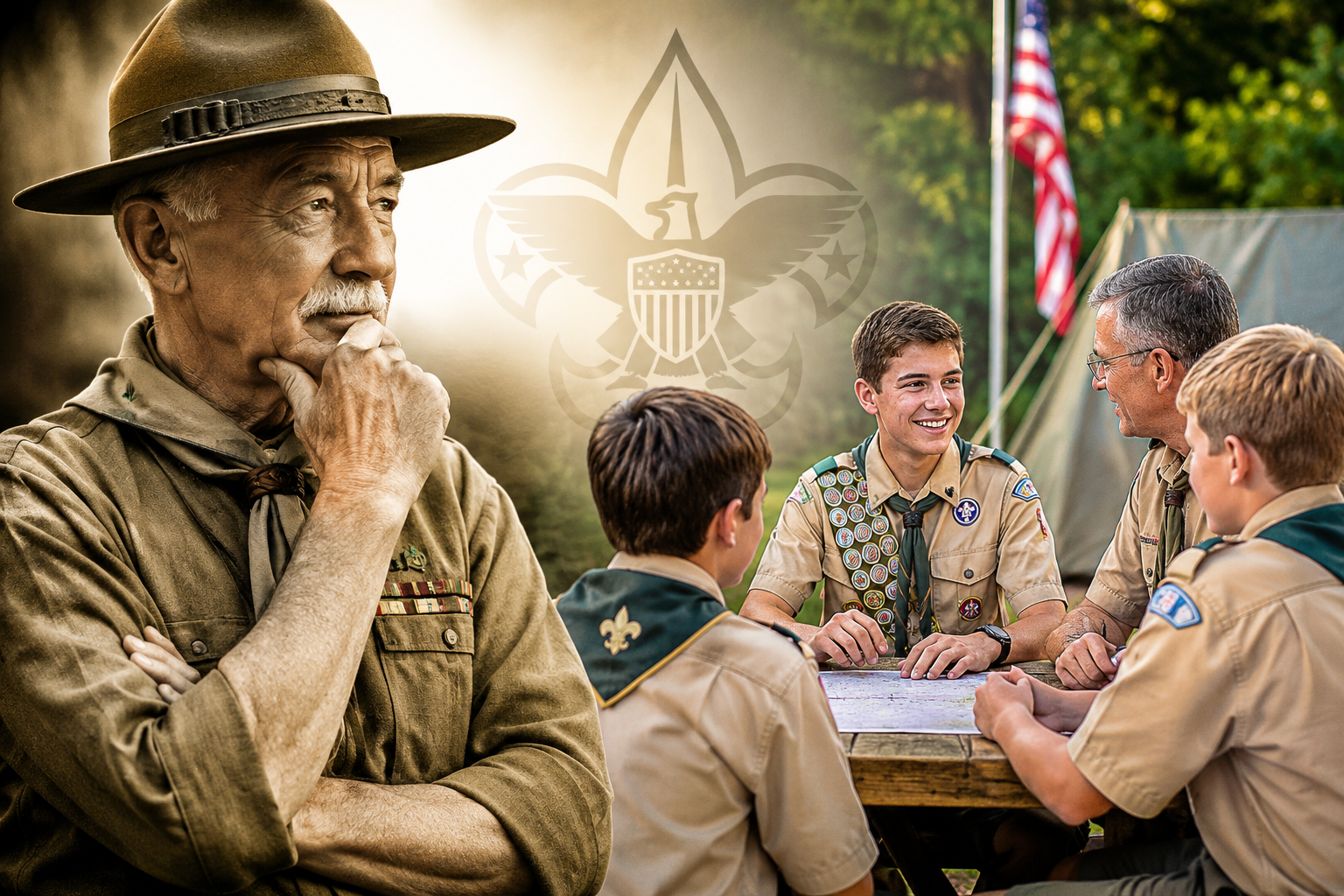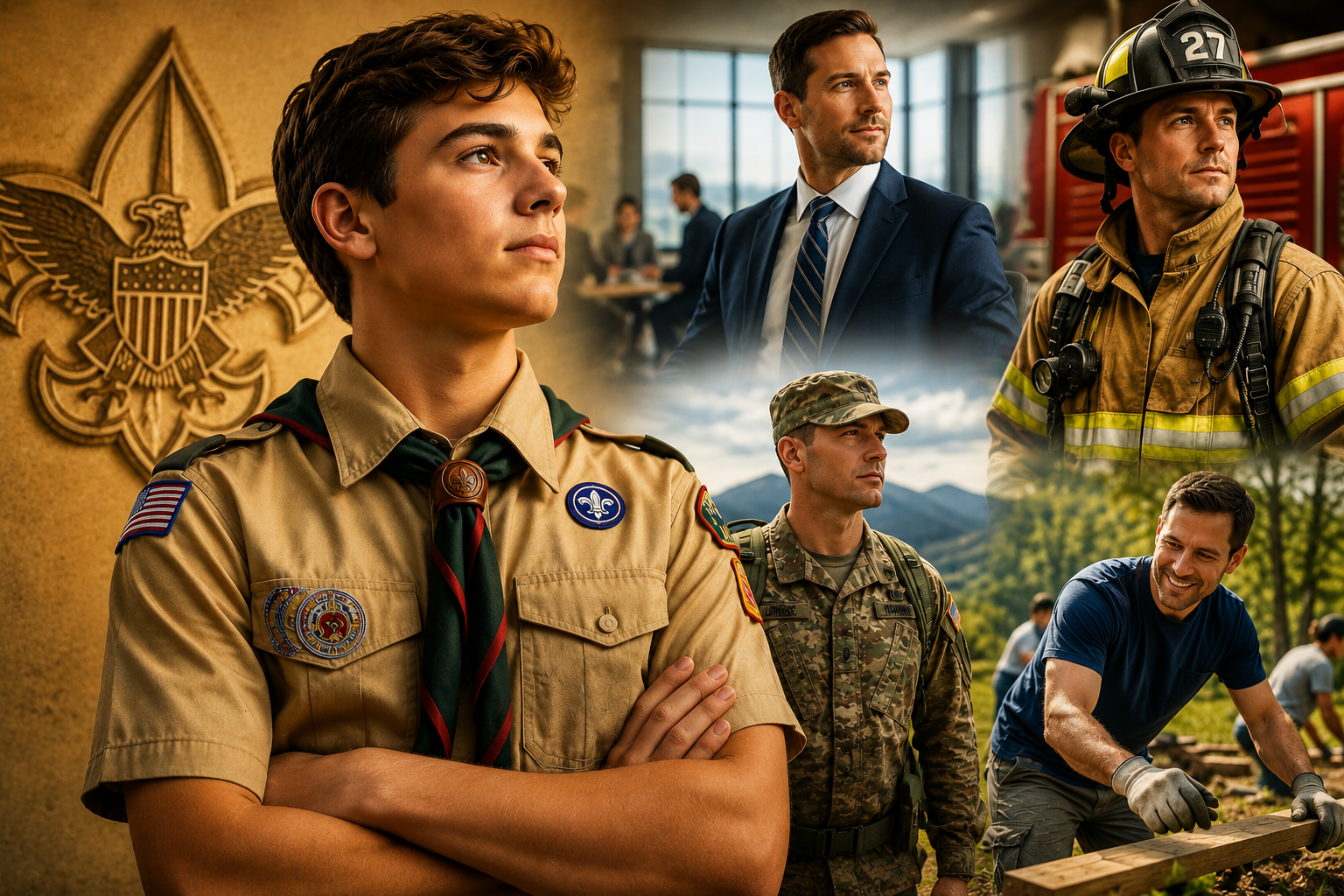
If a Scout forgot every knot, every merit badge requirement, and every rank requirement, what skill would still remain 20 years later?
The answer is leadership. Scouting teaches young people how to lead without needing a title, how to communicate with confidence, how to solve problems under pressure, and how to work with others toward a shared goal. Those lessons stay with them long after the details of individual activities fade.
Leadership Without a Title
In Scouting, leadership often happens naturally. A young person steps forward, helps the group, encourages peers, and learns that influence is not limited to the person wearing a patch or holding a formal position.
Scouting gives youth a safe place to practice leadership, make mistakes, recover, and try again. They learn to build consensus, inspire their peers, take initiative, and work toward goals that matter to the group.
Communication Skills
Communication may be one of the most valuable skills Scouts carry into adulthood. Scouting asks young people to explain ideas, speak with peers and adults, teach skills, and listen actively.
- They gain confidence through public speaking, ceremonies, presentations, and teaching moments.
- They learn to break a skill into understandable steps, such as when using the EDGE method.
- They practice active listening by focusing on the issue rather than the emotion around it.
- They build confidence speaking with adults and peers in a respectful, useful way.
These abilities are highly transferable. Whether a Scout later enters college, the workplace, family life, or community service, communication remains essential.
Running Meetings and Solving Problems
Scouting teaches young people how to run meetings, organize their peers, and keep a group moving. That is a practical leadership skill many adults still struggle to master.
Scouts also learn problem-solving under pressure. A schedule changes, weather rolls in, equipment fails, or a patrol needs to adjust quickly. These moments are not usually dramatic, but they require clear thinking, calm communication, and teamwork.
- Bad weather: A campfire may need to move to a pavilion or be redesigned on the spot.
- Equipment failure: A missing stove hose can force a patrol to rethink dinner plans.
- Last-minute changes: A revised camporee schedule may require quick coordination.
- Patrol conflicts: Scouts must listen, remove unnecessary emotion, and focus on solving the issue.
Teamwork, Delegation, and Trust
A patrol is a working team: a group of people with different skills moving toward a shared goal. Through that experience, Scouts learn how to cooperate, delegate, and depend on one another.
Delegation might mean asking an artistic Scout to design a patrol flag, assigning a knowledgeable Scout to lead a flag ceremony, or dividing camp duties based on each person’s strengths. Over time, Scouts learn that teamwork depends on trust, reliability, and respect for different personalities.
These lessons matter far beyond Scouting. In the workplace and in community life, people must cooperate, contribute, and follow through even when everyone does not think the same way.
Responsibility and Accountability
Scouting reinforces responsibility through its core values and the Scout Oath & Law. Trustworthiness is not just a word; it is practiced when a Scout accepts a task, completes it, and owns the outcome.
- Owning mistakes instead of blaming others.
- Following through until the job is complete.
- Managing time by breaking work into smaller tasks.
- Being dependable when others are counting on them.
Those habits become part of who a Scout is. They are also qualities employers, families, and communities value deeply.
Decision-Making Through Adventure
Scouting gives young people real opportunities to make decisions. Planning a campout, choosing gear, preparing food, and assigning responsibilities should not be adult-only decisions. Youth learn by working through those choices themselves, with adults serving as mentors and coaches.
Adventure creates the motivation. A Scout may simply want to go on a great trip, but that goal requires planning, timing, resources, and responsibility. The learning happens because the adventure matters.
- What gear will we need?
- Who is responsible for food, fuel, and equipment?
- What needs to happen first, second, and last?
- How do we adjust if the plan changes?
Through that process, Scouts learn to think ahead and make decisions based on facts, timing, and the needs of the group.
Servant Leadership
Servant leadership is one of the most powerful leadership lessons in Scouting. A servant leader works in the background so the group can succeed. When it is done well, the group feels ownership of the success because everyone contributed.
The servant leader does not need constant recognition. They guide, support, delegate by example, and step in when work still needs to be done. That kind of leadership builds strong teams because people feel trusted, supported, and included.
Conflict Resolution
Every Scout unit experiences conflict. The important question is whether young people learn how to handle it constructively. Scouting gives them repeated opportunities to listen, compromise, negotiate, and keep the group focused on the goal.
Those skills are useful in patrols, troops, families, workplaces, and communities. A Scout who learns to resolve conflict respectfully carries a valuable leadership tool into adulthood.
Planning, Failure, and Confidence
Planning teaches Scouts to begin with the end in mind. A major canoe trip, campout, or patrol adventure requires preparation long before anyone arrives at the starting point. Adults help by asking good questions, coaching without taking over, and encouraging youth to think through the details.
Not every plan succeeds the first time, and that is part of the lesson. Failure can be a first attempt in learning. When Scouts fail safely, they discover what to improve, try again, and build confidence through experience.
Over time, those repeated attempts create capable young people who know how to lead, communicate, plan, adapt, and serve others. They may forget a knot or a requirement, but they carry the deeper lessons with them.
The Lasting Value of Scouting
Scouting builds more than outdoor skills. It builds character, confidence, responsibility, and leadership. Those values become part of a young person’s life and continue shaping who they are long after their time in the program. That is how we keep “building a better America, one Scout at a time”. Till next time, I’ll see you on the trail.