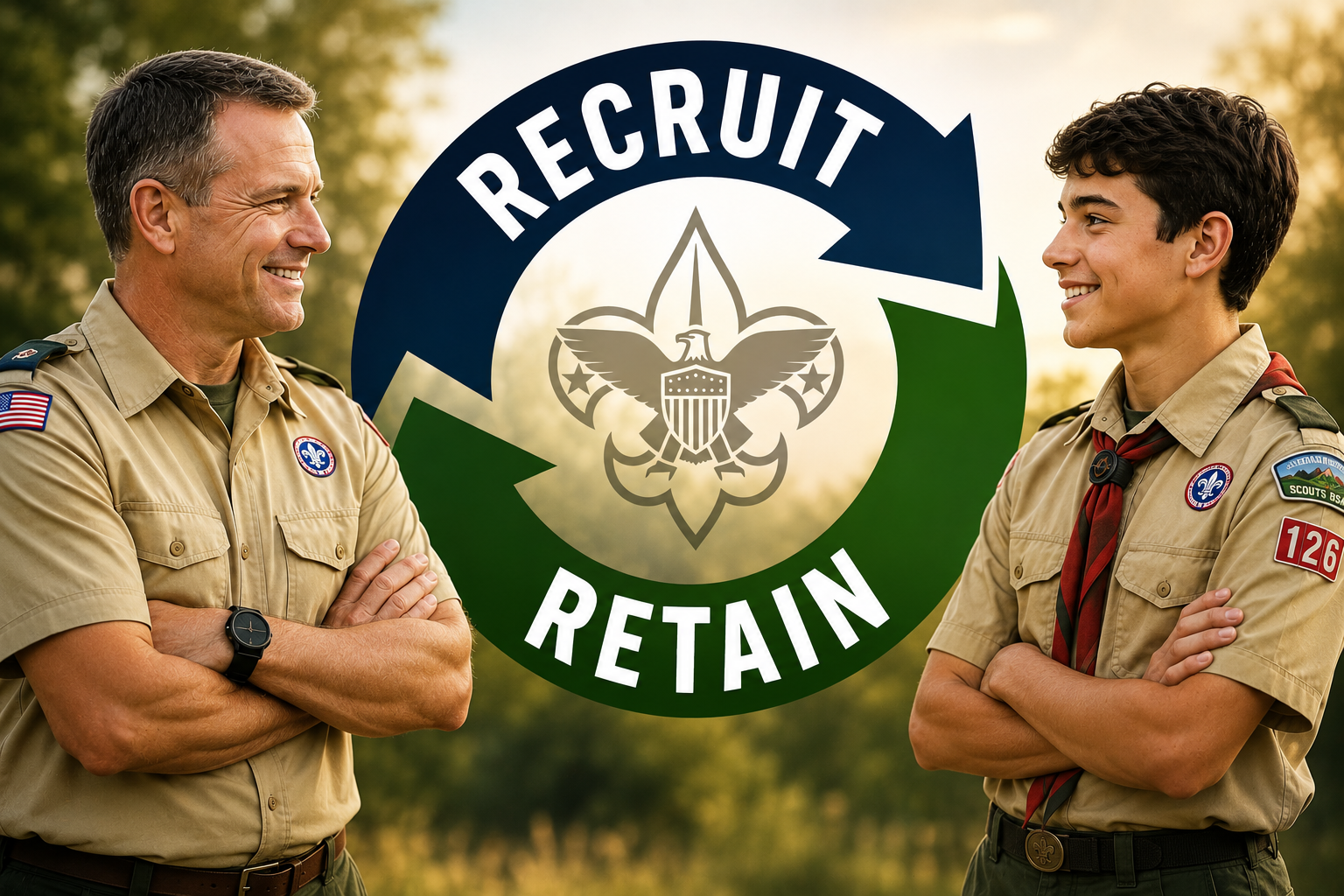
If you recruit 10 new Scouts and only 5 remain by the end of the year, you do not have a recruiting problem. You have a retention problem.
Recruiting should always be paired with retention. Bringing new Scouts into the unit matters, but keeping them active, engaged, and excited is what creates real growth. If your unit gains 10 to 15 Scouts and then loses 10 to 15 Scouts, you are not moving forward, you are slowly slipping backward.
Know Your Numbers
The first step is to understand exactly where your unit stands. Good recruiting and retention decisions depend on clear numbers, not guesses.
- How many Scouts did you recruit last year?
- How many families actually showed up and joined?
- How many of those new Scouts are still active?
- How many attend meetings, events, activities, and outings?
- How many Scouts do you expect to age out, move away, or leave for other reasons?
That final number is especially important. Every unit naturally loses some Scouts each year. Older Scouts may “age out”, earn Eagle, leave for school, or move away with their families. When you know how many Scouts are likely to leave, you can set a realistic recruiting goal that replaces those losses and supports healthy growth.
Identify Why Scouts Leave
Retention begins with asking the right question: why did they leave?
Scouts may leave because they are not having fun, because the program does not meet their interests, because communication is unclear, or because something in the unit experience is not working. Sometimes the reason is simple, such as a family move or a transfer to another unit. Other times, it may reveal a problem that needs attention, such as lack of engagement, unmet parent expectations, or youth dynamics that adults have not noticed.
When a Scout leaves, the membership team should try to learn the reason and report it appropriately to the committee. Those reasons should not be ignored. They should become part of the unit’s action plan.
Build a Year-Round Recruiting Calendar
Recruiting should not happen only once a year. Units lose Scouts year-round, so they should also recruit year-round.
Many packs and troops focus most of their energy on back-to-school nights, school rallies, or “back to the pack” events. Those are important, but they should be treated as one part of a larger recruiting plan.
- Fall: Prepare for school-year recruiting, welcome new families, and have updated materials ready.
- Winter: Encourage Scouts to invite friends to fun events, especially activities that include food, games, camping, or hands-on experiences.
- Spring: Create visible, inviting events such as movie nights, community booths, parades, ceremonies, or outdoor activities.
- Summer: Use day camp, summer camp, and high-adventure preparation to show families the excitement of the program.
The goal is to create a full-year recruiting rhythm that supports the unit’s membership goals and keeps the program visible in the community.
Assign Clear Ownership
Recruiting and retention need a team, not just good intentions. A membership chair, or a small membership team, should take responsibility for keeping the unit ready throughout the year.
This team should make sure the unit has current applications, parent information, calendars, flyers, and welcome materials. They should also help coordinate recruiting events, new-parent support, and follow-up with families.
Membership can be divided into two related areas:
- Recruiting: The people who attend events, prepare packets, promote the unit, and invite families to visit.
- Retention: The people who welcome new families, answer questions, connect parents with mentors, and help new Scouts stay engaged.
Use Den Chiefs and Troop Guides Wisely
Den Chiefs are some of the best recruiters a troop can have. When trained Scouts serve in packs and dens, they build relationships with younger Scouts before crossover. Those familiar faces can make the transition into a troop much easier.
The membership team should work with the Scoutmaster and Assistant Scoutmasters to identify eligible Scouts, encourage Den Chief training, and support those Scouts in their service. After crossover, many former Den Chiefs can become Troop Guides, helping new Scouts succeed in their first-year patrol and learn the patrol method.
Focus on the First 90 Days
The first few months are critical. New Scouts and their families often decide during this period whether they feel connected enough to stay.
Every new family should be greeted, introduced, and given clear points of contact. Parents need to know who to ask about schedules, advancement, transportation, activities, and unit expectations. If families feel lost, they are less likely to stay involved.
Helpful first-90-day practices include:
- Introduce new parents to committee members and key adult leaders.
- Pair new parents with experienced parent mentors.
- Hold a new-parent orientation meeting.
- Create a welcoming parent area during meetings, when appropriate.
- Offer simple tasks that help parents contribute early.
- Keep communication clear, written, and easy to find.
Parent retention is Scout retention. When parents feel informed, welcomed, and useful, their Scouts are much more likely to remain active.
Program Quality Drives Retention
Scouts stay when the program is exciting, meaningful, and youth-centered. A strong calendar gives Scouts something to look forward to and gives families a reason to stay engaged.
For troops, crews, and ships, older youth need real input into the calendar. When Scouts help choose the adventures, outings, and activities, they are more likely to buy in and remain involved. A strong program might include camping, shooting sports, service projects, historic sites, high-adventure opportunities, summer camp, or unique local experiences.
Cub Scout packs often have much of the program structure built in, but they still need energy, visibility, and consistent communication. The adventure is the draw. The program is the reason families stay.
Conduct an Annual Membership Review
Each year, the unit should review its membership results. This review helps the committee understand where Scouts are coming from, what recruiting methods are working, and where retention needs improvement.
During the review, ask:
- Where did new Scouts come from?
- Which schools, packs, churches, community groups, or events produced results?
- Which recruiting efforts took time but produced little return?
- How many Scouts left, and why?
- What changes should the unit make before the next recruiting cycle?
- What realistic growth goal should the unit set for the coming year?
Be realistic with goals. Scouting does not need to be flashy to be effective. Families are drawn to adventure, friendship, leadership, and meaningful experiences. Focus on what your unit can do well, then build from there.
Keep Recruiting… and Keep Retaining
Recruiting brings Scouts through the door. Retention keeps them there. A healthy unit does both with intention.
Know your numbers. Build a year-round recruiting calendar. Assign ownership. Welcome new families. Strengthen the program. Listen when Scouts leave. Then adjust and keep improving. Scouting grows one Scout at a time, and every retained Scout represents a stronger unit, a stronger program, and a stronger community. Keep doing the good work: recruit well, retain well, and help every Scout find a reason to stay on the trail. Until next time, I’ll see you on the trail.
