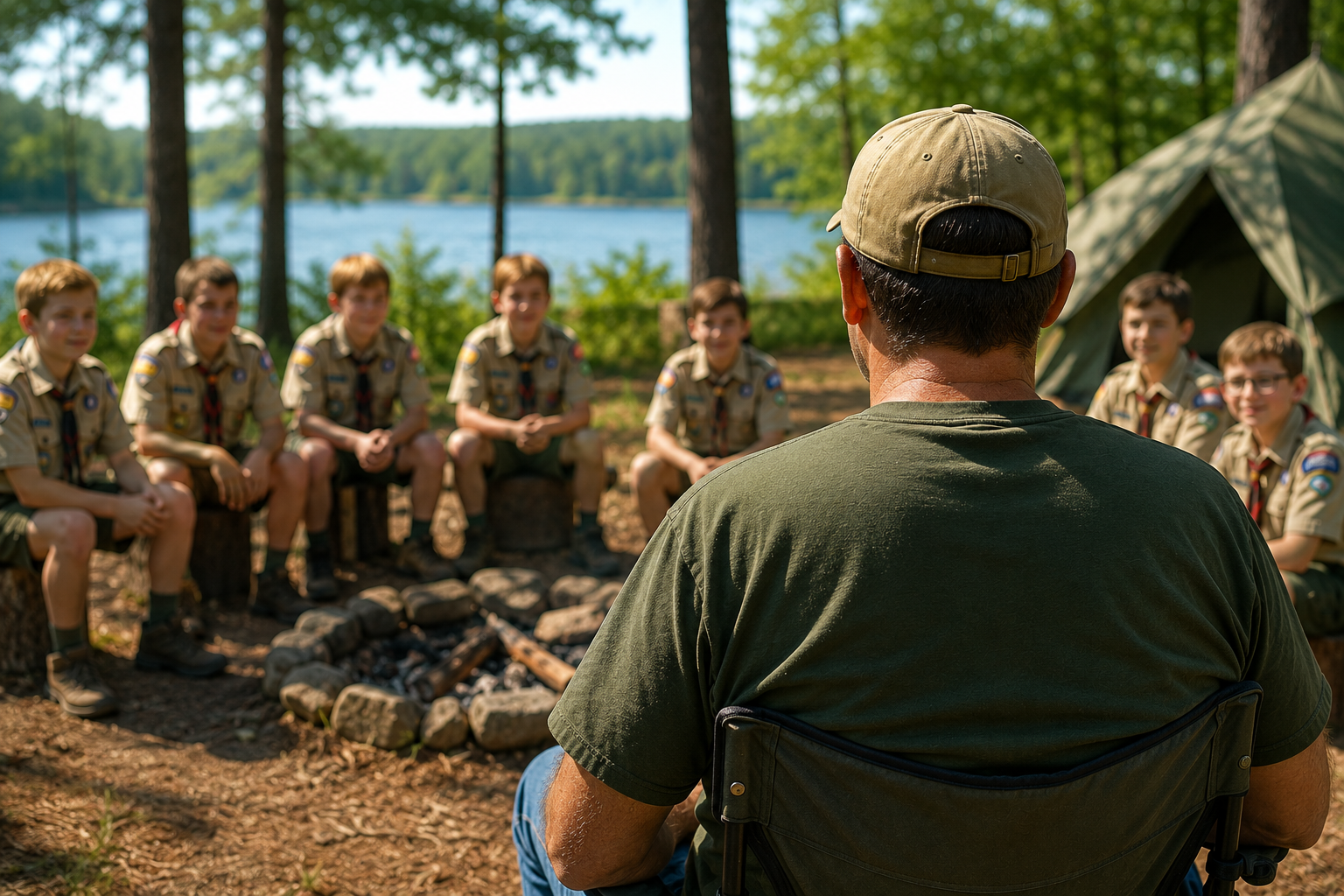
Every summer, well-meaning adults head to camp eager to help Scouts have a great experience. That instinct is good… but the worst thing an adult leader can do is help too much.
Summer camp is meant to be an adventure for Scouts. It gives them space to explore, make choices, solve problems, and practice leadership away from the normal routines of home. Adults play an important role, but that role is not to control every outcome. Your job is to keep Scouts safe, support the youth leadership structure, and stay far enough in the background for Scouts to grow.
Remember Your Role
If you are attending camp as a parent, make the role clear from the beginning: at camp, you are not “Mom” or “Dad” first… you are an adult Scout leader. That distinction matters. Adult leaders are trained, certified in youth protection with safeguarding youth Training, and responsible for serving all Scouts, not just their own children.
Some Scouts, especially first-time campers, may struggle with being away from home. Homesickness often appears after the first day or two, and it can lead to late-night conversations, anxiety, or uncertainty. When that happens, adults should respond with patience, compassion, and proper two-deep leadership. Your goal is to help the Scout work through the challenge safely and appropriately, not to replace the growth that comes from the experience.
Expect Camp to Be Imperfect
Summer camp rarely goes exactly as planned. Weather may close the waterfront or pool. A dining hall may be under renovation. Facilities may be spread across a large property, and a Scout’s schedule may require a long walk from one program area to another.
Adult leaders should help the unit adapt, but they should not take over every inconvenience. Scouts may complain about food, walking distances, schedules, tent mates, or merit badge conflicts. Many of those situations are opportunities for Scouts to communicate, negotiate, prioritize, and learn responsibility.
- Bring practical gear, including comfortable shoes and a backup pair.
- Help newer Scouts understand how to navigate camp and manage their schedule.
- Encourage Scouts to solve reasonable problems through the proper youth leadership channels.
- Step in only when safety, youth protection, or serious well-being is involved.
Myth: Adults Are There to Solve Every Problem
One of the biggest myths about summer camp is that adults are there to fix every issue. They are not. Your primary responsibility is safety: making sure Scouts are not putting themselves or others at risk.
Your next responsibility is to support your own unit. That does not mean running every activity, tracking every merit badge record, resolving every schedule conflict, or speaking for every Scout at the dining hall. When the issue belongs to the Scout, let the Scout take the lead.
For example, if a Scout is late to a merit badge because the waterfront is far from handicraft, that Scout can explain the situation to the counselor. If two tent mates have different standards for neatness, give them room to work it out. If a Scout has a concern about food or scheduling, encourage the youth leadership to address it first.
Stay in the Background
Your real value often comes from observing quietly. Stay close enough to notice safety concerns, but far enough away that Scouts can have their own experience. No Scout benefits from an adult hovering over every decision.
Adult leaders are especially important for transportation, emergency support, and coaching youth leaders. In an emergency, adults may need to step forward and use their training. In ordinary camp life, however, adults should coach from the side rather than lead from the front.
When youth leaders ask for help, use open-ended questions:
- “What do you think should happen next?”
- “What options have you considered?”
- “What did your patrol leader say?”
- “How can you solve this safely?”
Those questions help Scouts think through decisions instead of depending on adults for every answer.
Build Relationships with Other Adults
Summer camp is also a valuable opportunity for adults to connect with one another. New leaders can learn from experienced Scouters, understand how the unit functions, and build trust with the people who work directly with the Scouts throughout the year.
If you are newer to the troop, use camp to ask questions, observe how other leaders support the program, and participate in adult leader activities when appropriate. If you are attending your council’s camp, you may also have a chance to meet district or council leaders. If you are visiting another council’s camp, you can learn how other programs operate and bring useful ideas back to your unit.
Be a Cheerleader, Not a Manager
Adults at camp should support youth leadership, not replace it. Your job is to encourage Scouts as they lead their patrols and troop. A simple word of confidence, “You’ve got this”… can help a youth leader take the next step.
When Scouts bypass their Patrol Leader or Senior Patrol Leader and come directly to adults, gently redirect them back to the youth structure. Ask what their patrol leader said, whether they have talked with their youth leader, and what solution they think might work. This keeps the leadership model intact, even while the unit is away at camp.
Coach Scouts Toward Solutions
Scouts often already have ideas about how to solve a problem. Adults can help by asking questions that guide their thinking without taking ownership away from them. The goal is to help Scouts identify a solution, test whether it is safe and practical, and then carry it out.
That is one of the most important reasons adults attend camp: to help Scouts lead their own unit. You are not there to be the person who fixes everything. You are there to help youth leaders learn how to lead.
Focus on the Long-Term Impact
Years from now, Scouts probably will not remember whether an adult solved a small dining hall issue or rearranged a merit badge schedule. They are more likely to remember the adventure, the challenge, the friendships, and the moments when they learned they could handle more than they thought.
That is why adults should focus on safety, encouragement, and leadership development. Create room for good memories to happen. Support the youth leaders, help them succeed, and give Scouts the chance to experience camp as their own adventure.
And thank you for volunteering. Adults who attend summer camp often give up family time, vacation time, and personal comfort to make the experience possible. That service matters, and units should be grateful for the leaders who step up.
After Camp: Share What You Learned
When camp is over, consider holding a Scoutmaster or Scouter retreat for the adult leadership team. This gives leaders who attended camp, and those who did not, a chance to review what happened, discuss lessons learned, and strengthen the unit’s adult leadership team.
A retreat does not have to happen at a campground. It could be a meeting, a weekend gathering, or another planned event. The important part is creating time for honest conversation, shared learning, and stronger camaraderie among the adults who support the troop.
Summer camp gives adult leaders many opportunities to protect Scouts, support youth leadership, build relationships, and learn from others. The key is to stay in the right role. Be present, be prepared, and be supportive, but let the Scouts own the adventure. Until next time, I will see you on the trail.
